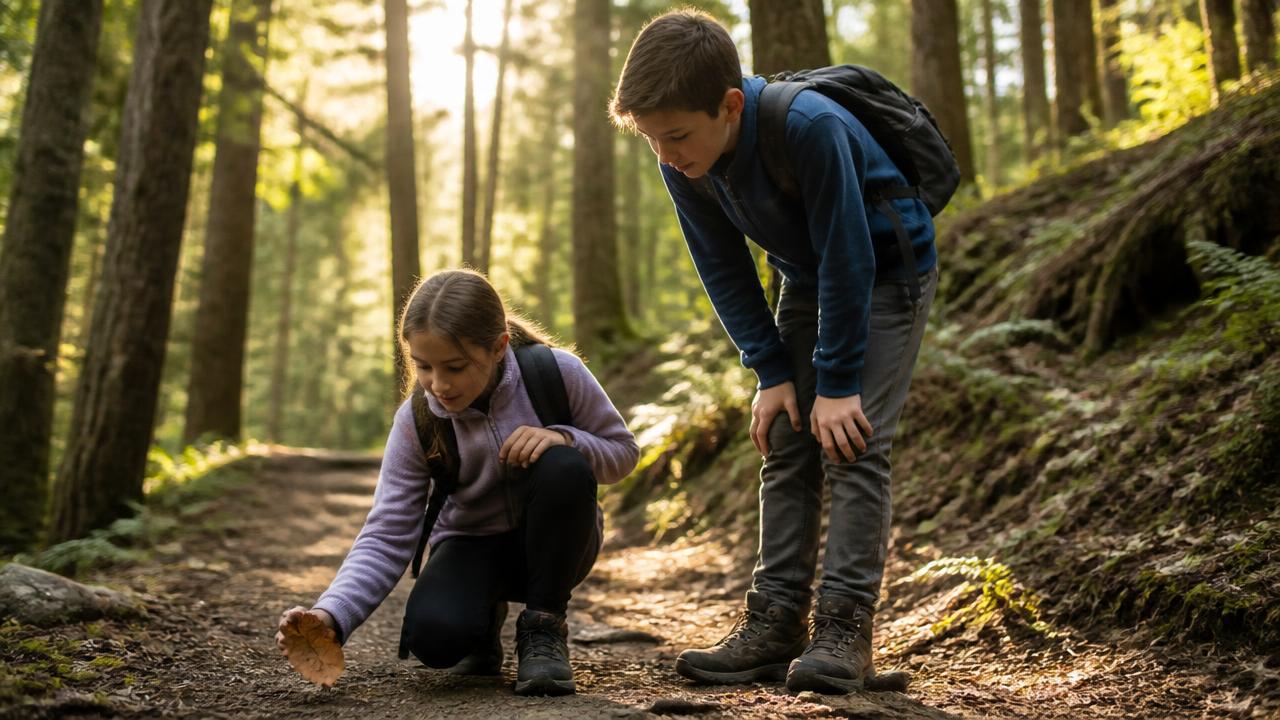
Connecting With Nature: Why Time Outside Builds Calm and Wonder in Kids
Ask a child what they did outside today and you will learn a lot about their week. Somewhere between homework, practice, and screens, the outdoors quietly disappeared from a lot of childhoods. Getting it back may be the cheapest, simplest thing a family can do for a kid's mood, focus, and sense of wonder.
Nature does not ask children to perform. There is no score, no grade, no audience. That is exactly why it works.
These ideas pair naturally with the lessons in 120 Positive Quotes for Kids, a collection written to help young readers ages 8-14 build confidence, curiosity, and self-knowledge.

What the Research Says About Kids and Nature
A large 2019 study published in Scientific Reports surveyed nearly 20,000 people and found that spending about 120 minutes a week in natural settings was consistently associated with better health and well-being. It did not matter much whether that time came in one long hike or several short visits to a park. What mattered was that it happened.
Psychologists have a name for part of the effect: attention restoration. Focused schoolwork drains a specific kind of mental energy. Natural settings hold a child's attention gently, without demanding it, and that lets the focused kind recover. In plain terms: a walk outside is not a break from thinking. It is what makes the next hour of thinking possible.
John Muir on Getting More Than You Came For
The naturalist John Muir, who helped protect Yosemite, wrote:
"In every walk with nature one receives far more than he seeks."
This is a good line for a reluctant kid at the trailhead. Nobody heads outside expecting the best part of their day. That is usually what makes it the best part.
Rachel Carson on Keeping Wonder Alive
Rachel Carson, the marine biologist whose book Silent Spring launched the modern environmental movement, wrote a small, beautiful book called The Sense of Wonder about exploring nature with a child. In it she wrote:
"If a child is to keep alive his inborn sense of wonder, he needs the companionship of at least one adult who can share it, rediscovering with him the joy, excitement and mystery of the world we live in."
Notice what she does not say. She does not say the adult needs to know the names of the birds. Wonder is contagious, and it is caught, not taught.
Thoreau on Paying Attention
Henry David Thoreau moved to a cabin at Walden Pond and wrote:
"I went to the woods because I wished to live deliberately, to front only the essential facts of life."
For a middle schooler, "deliberately" is the useful word. Most of a kid's day happens to them. Time outside can be something they choose, notice, and remember.
A line often credited to Lao Tzu makes a similar point, though it does not appear in the Tao Te Ching in that form:
"Nature does not hurry, yet everything is accomplished."
Kids who feel behind at school need to hear this. Growth has a pace, and the pace is not an emergency.
Simple Ways to Get Kids Outside
1. Aim for the 120 minutes. Split it however works: a Saturday hike, a walk after dinner, twenty minutes in the yard before homework.
2. Give the walk a job. Find five different leaves. Photograph three bugs. Follow the creek until it turns. A mission beats a lecture.
3. Leave the phone in a pocket. One camera is fine. Notifications are not.
4. Go in bad weather sometimes. Kids who only go out on perfect days learn that comfort comes first.
5. Name what you notice out loud. "Look how the light hits that." That is Carson's companionship in one sentence.
Nature Teaches Patience Better Than Any Lecture
Seeds do not sprout on a schedule that suits an impatient ten-year-old. Trails are longer than they look. Fish do not care that you are bored. Every one of those small frustrations teaches the same quiet lesson: some good things take time, and the waiting is part of them.
That lesson transfers. A child who has waited out a slow afternoon by a pond has a little more patience for a hard math unit.
If your child responds to short, memorable lines, 120 Positive Quotes for Kids gathers 120 of them, each with a plain-language reflection, to help kids ages 8 to 14 build curiosity, calm, and confidence.
Because the world is more interesting than any screen showing it. Kids just need someone to walk out the door with them.