
Doing Your Best: Quotes to Help Kids Measure Success the Right Way
Ask a child if they had a good game and most will tell you the score. Ask if they did their best and you will get a pause. That pause is where character gets built.
Comparison is the fastest way to make a hardworking kid feel like a failure. There is always someone faster, someone with a better grade, someone picked first. A child who only measures against other people is handing their self-worth to strangers.
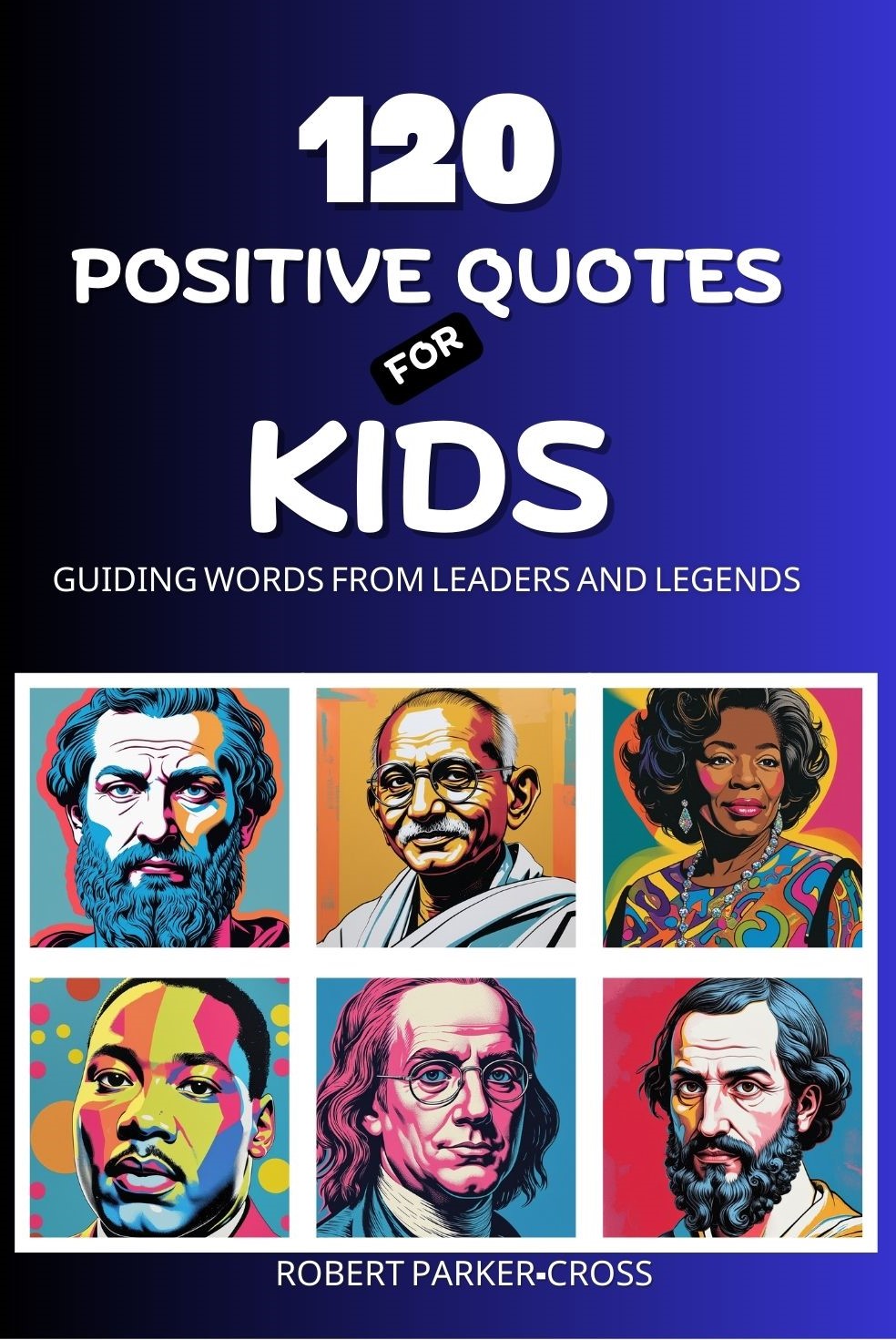
These ideas pair naturally with the lessons in 120 Positive Quotes for Kids, a collection written to help young readers ages 8-14 build confidence and a healthy relationship with effort.
John Wooden's Definition of Success
John Wooden won ten national championships at UCLA, and he refused to define success by any of them. His definition, which he taught for decades:
"Success is peace of mind which is a direct result of self-satisfaction in knowing you did your best to become the best that you are capable of becoming."
Read that again with a child in mind. Nothing in it mentions other people. Wooden's players could lose a game and still have succeeded, or win one and know they had not. That is a scoreboard a kid can actually control.
He also told them plainly:
"Don't let what you cannot do interfere with what you can do."
Martin Luther King Jr. on Doing It Well
In a 1967 speech to students in Philadelphia, Dr. Martin Luther King Jr. said:
"If a man is called to be a street sweeper, he should sweep streets even as Michelangelo painted, or Beethoven composed music, or Shakespeare wrote poetry. He should sweep streets so well that all the hosts of heaven and earth will pause to say, here lived a great street sweeper who did his job well."
The lesson for a child is that dignity comes from how you do the work, not from which work you got. A kid who cleans their room like it matters is practicing something much bigger than tidiness.
Steve Jobs on Caring About the Work
In his 2005 Stanford commencement address, Steve Jobs told graduates:
"Your work is going to fill a large part of your life, and the only way to be truly satisfied is to do what you believe is great work."
For a middle schooler, "great work" is not a career plan. It is the difference between a science project thrown together on Sunday night and one they were actually curious about.
Aristotle on Repetition
Aristotle wrote in the Nicomachean Ethics that character is built by practice, not intention:
"We become just by doing just acts, temperate by doing temperate acts, brave by doing brave acts."
(The popular version, "we are what we repeatedly do," is Will Durant summarizing him, not Aristotle himself.) Either way the point holds: nobody becomes a hard worker by deciding to be one. They become one by doing the next hard thing.
What "Your Best" Does Not Mean
It does not mean maximum effort in all directions at all times. A child who tries to give one hundred percent to school, three sports, an instrument, and a social life will not become excellent. They will become exhausted.
Doing your best means choosing what deserves your best and being honest about the rest. That is a skill most adults are still learning, and it is worth naming early.
Five Ways to Shift the Scoreboard
1. Ask about effort before results. "How did you play?" before "did you win?"
2. Compare them to themselves. Last month's page, last season's time, last year's report card.
3. Let a low-stakes thing be done at eighty percent. Teaching priorities is teaching wisdom.
4. Praise finishing. Plenty of talented kids never learn to complete anything.
5. Say the quiet part. "You did your best today, and I noticed." Kids remember being noticed far longer than being praised.
Why This Sticks
A child who learns to judge themselves by effort carries a scoreboard nobody can take away. Rankings change, teams change, classes get harder. The question "did I do my best?" works at every age and in every room.
120 Positive Quotes for Kids gathers 120 lines like these, each paired with a short reflection, for readers ages 8 to 14 who are still deciding what kind of person they want to be.
Because the goal was never to raise the best kid in the room. It was to raise a kid who knows what their best feels like.