Positive Quotes for Kids: The Science of Why One Quote Can Change a Life
In a world filled with constant distractions and daily challenges, parents and teachers seek simple yet effective tools to support children's emotional growth. Positive quotes for kids offer one such tool. A single, carefully chosen sentence from respected leaders and thinkers can distill complex values—such as resilience, self-knowledge, and perseverance—into words that are easy for young minds to understand, remember, and apply.
Far from empty platitudes, motivational quotes for children serve as accessible entry points to important life lessons. Research in psychology and education suggests that brief, affirmative statements help children internalize positive concepts and translate them into everyday behavior. This article explores the evidence and offers practical ways to bring these benefits into daily life.
The Science Behind Positive Quotes for Kids
Positive quotes work in ways that align with established findings from cognitive and educational psychology. Short, memorable statements function like mental shortcuts, making abstract ideas more concrete and easier to recall during moments of need.
A 2023 meta-analysis of self-affirmation interventions in educational settings found a small but reliable positive effect on students' well-being and performance. These interventions often involve brief reflection on core values—similar to reading and discussing a positive quote.
Another 2025 systematic review and meta-analysis of school-based interventions for resilience in children and adolescents examined 38 randomized controlled trials involving over 15,000 participants. The pooled results showed a small but statistically significant improvement in resilience. Many of these programs incorporated positive psychology elements that parallel the themes found in collections of motivational quotes for children.
These findings align with broader understanding of how brief affirmations and value-focused statements help children build self-schemas—mental frameworks that shape how they see themselves and respond to setbacks. When children repeatedly encounter encouraging words about resilience or continuous learning, they gradually internalize those ideas, making it easier to apply them in real situations such as facing a difficult school assignment or navigating social challenges.
Importantly, the benefits appear most consistent when the messages feel authentic and are delivered in supportive, everyday contexts rather than as forced exercises. This makes positive quotes for kids particularly practical: they are flexible, require no special training, and can be woven naturally into bedtime routines, classroom discussions, or family car rides.
How Positive Quotes Help Children Internalize Values
Quotes distill wisdom into digestible form. A complex idea like "bouncing back from failure builds strength" becomes memorable through a short phrase such as "Fall seven times, stand up eight" (a Japanese proverb). Repetition and discussion help move the concept from short-term memory to long-term understanding, supporting the development of a growth mindset.
Research on character education has long recognized that proverbs, sayings, and guiding words help children connect values with behavior. When parents or teachers pair a quote with a simple conversation—"What might this look like for you today?"—children practice reflection and begin to see the practical application. Over time, these small moments contribute to stronger emotional regulation, greater confidence, and a healthier approach to challenges.
Practical Ways to Use Positive Quotes for Kids at Home and School
Incorporating positive quotes into daily life is straightforward and rewarding. Here are several evidence-aligned approaches:
Consistency matters more than intensity. Even brief, regular exposure to uplifting messages can contribute to the cumulative effects observed in resilience and self-affirmation research.
Examples of Impactful Quotes Organized by Theme
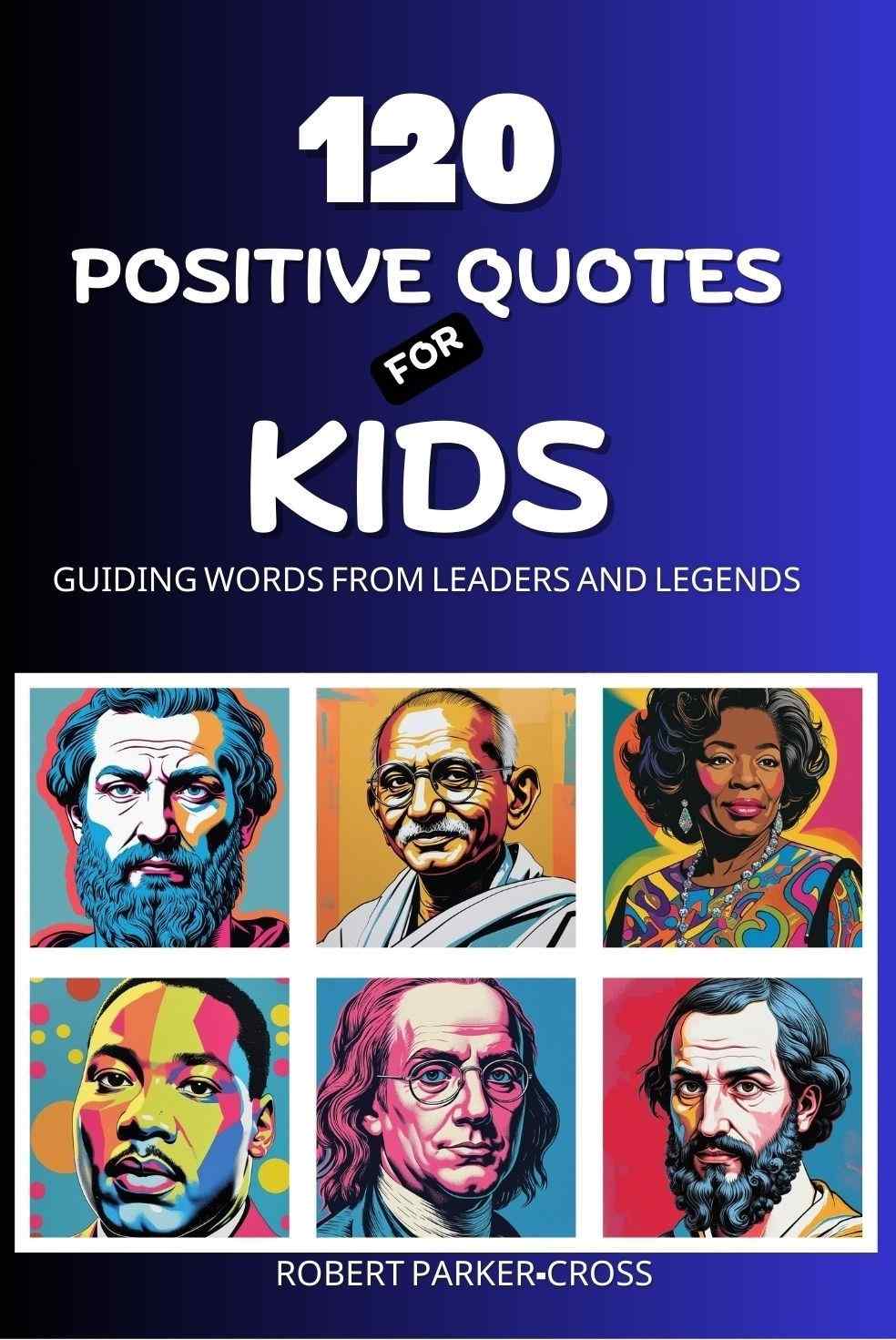
Collections like 120 Positive Quotes for Kids group wisdom by key life areas, making it easier for adults to find the right words when needed.
For resilience: "The oak fought the wind and was broken. The willow bent with the wind and survived." — Chinese proverb. This image helps children understand that flexibility often leads to greater strength.
For knowing yourself: "Know thyself." — Socrates (popularized form). Encouraging children to reflect on their unique qualities builds authentic self-confidence.
For getting started: "The journey of a thousand miles begins with one step." — Lao Tzu. This classic reminds young minds that courage is found in beginning, even when the full path is unclear.
Similar examples appear throughout both volumes, covering continuous learning, health and wellness, and more. Each quote serves as a ready conversation starter.
Bringing It All Together: A Simple Daily Practice
The research is encouraging: positive quotes for kids are not magic, but they are a practical, low-effort way to support the development of important values. When combined with caring adult guidance, they help children build inner resources that last.
Parents and teachers who make space for these small moments often report seeing gradual improvements in attitude, persistence, and self-belief. The effects may be modest at first, yet they compound over weeks and months—much like the small daily choices that shape a child's character.
If you are looking for a ready resource that brings together 120 carefully selected quotes from leaders and legends, organized by theme and designed specifically for children, consider 120 Positive Quotes for Kids Volume 1 and Volume 2. These books make it easy to find the right guiding words for any moment—whether at bedtime, in the classroom, or during family time.
Ready to share this timeless wisdom with the children in your life?
Buy *120 Positive Quotes for Kids Volume 1* on Amazon
Buy *120 Positive Quotes for Kids Volume 2* on Amazon
Start today — sign up below for 10 free positive quotes for kids delivered to your inbox each week, complete with simple discussion tips. Or explore the full collection on Amazon and begin building confidence, resilience, and a love of learning one quote at a time.
References
Escobar-Soler, C., Berrios, R., Peñaloza-Díaz, G., Melis-Rivera, C., et al. (2024). Effectiveness of self-affirmation interventions in educational settings: A meta-analysis. Healthcare, 12(1), 3. https://doi.org/10.3390/healthcare12010003
Cai, C., Mei, Z., Wang, Z., & Luo, S. (2025). School-based interventions for resilience in children and adolescents: A systematic review and meta-analysis of randomized controlled trials. Frontiers in Psychiatry, 16, 1594658. https://doi.org/10.3389/fpsyt.2025.1594658