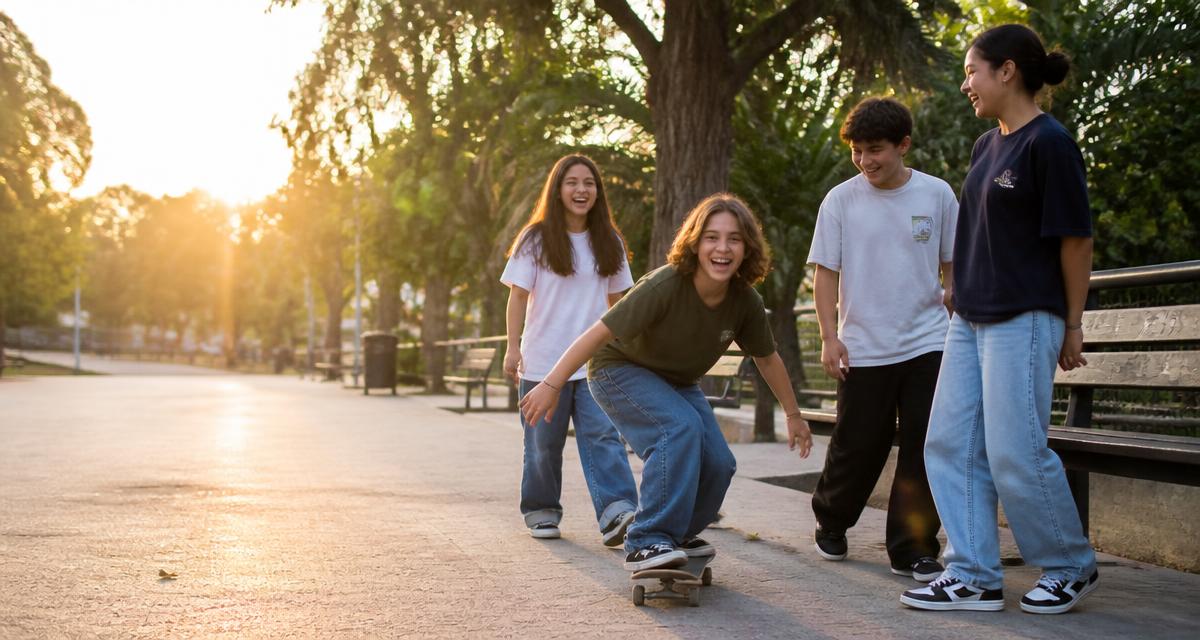
Enjoying Life: Teaching Kids to Notice the Good Parts
Two children can have the exact same Saturday and remember it completely differently. One recalls the rain that cut the game short. The other recalls the puddle. Neither is wrong about the facts. They are just paying attention to different parts of them.
Noticing the good parts is not luck or temperament. Psychologists call it savoring, and like anything else, kids get better at it with practice.
These ideas build on our post on why fun matters, and pair naturally with the lessons in 120 Positive Quotes for Kids.

Savoring Is a Skill
Researchers Fred Bryant and Joseph Veroff spent years studying savoring: the deliberate act of noticing and extending a good experience rather than letting it slide past. Their work found that people who savor report more enjoyment from the same events. The events do not change. The attention does.
Related research on gratitude by Robert Emmons and Michael McCullough found that people who regularly wrote down things they were grateful for reported greater well-being than those who listed hassles. Again, the week was the same. The list was different.
For kids, this is genuinely good news: enjoying your life is not something you have to wait for. It is partly something you do.
Anne Frank on Looking for the Beauty
Anne Frank wrote in her diary while hiding from the Nazis in Amsterdam:
"Think of all the beauty still left around you and be happy."
There is no cheerful version of her situation, which is exactly why the line carries weight. She was not ignoring anything. She was refusing to let the hard parts be the only parts she looked at.
Yogi Berra on Paying Attention
Yogi Berra, the Yankees catcher who made a career of tangled wisdom, said:
"You can observe a lot by watching."
It sounds like a joke until you try it. Most of what makes a day good goes unnoticed because nobody was looking: a friend who saved you a seat, a dog that was happy to see you, a dinner you actually liked.
Thoreau on Not Sleepwalking Through It
Henry David Thoreau wrote in Walden:
"I went to the woods because I wished to live deliberately... and not, when I came to die, discover that I had not lived."
That is a heavy thought for a kid, so it is worth translating: it would be a shame to be somewhere good and miss it because you were somewhere else in your head.
A Note on Comparison
The fastest way to ruin a fine afternoon is to compare it to someone else's. Kids today can see a highlight reel of everyone else's weekend before breakfast. A vacation that felt great on Saturday feels ordinary on Sunday once a feed gets involved.
Teaching children to notice their own good parts is partly teaching them to stop measuring against edited versions of everyone else's.
Five Practices That Actually Work
1. Best part of the day, out loud. At dinner or bedtime, everyone names one. It takes ninety seconds and rewires what a kid looks for all day.
2. Take fewer photos, look longer. A minute of actually watching beats fifteen pictures nobody opens again.
3. Keep a two-line journal. Not a diary. Two lines about what happened and what was good about it.
4. Say thank you specifically. "Thanks for waiting for me" teaches noticing better than a generic thanks.
5. Have a slow thing. A weekly walk, a game, a breakfast. Enjoyment needs a container.
Enjoying Life Is Not the Opposite of Working Hard
Kids sometimes think they must choose between being serious and being happy. The people who last longest at hard things are almost always the ones who found something to enjoy in them. Enjoyment is not the reward at the end of effort. It is part of what makes the effort survivable.
120 Positive Quotes for Kids collects 120 short lines about gratitude, effort, and joy, each with a plain-language reflection for readers ages 8 to 14.
Because childhood goes by quickly for everyone. The kids who notice it while it happens get to keep more of it.
Free Resources for Home and the Classroom
Positive quotes by theme
Confidence, resilience, learning, and kindness—with sources and reflection questions.
Free printable coloring pages
Historical portraits, a quote, a biography, and room to reflect. No signup required.
Free one-page teacher kit
10 discussion questions and 3 activities for SEL, character, and resilience.